Public Hydration Infrastructure in the NYC Subways:
A Times Square–42nd Street Pilot
The New York City subway is the largest public transportation system in the United States, with more than three million people using it every weekday across 472 stations. Even though so many people rely on the subway every day, there are very few places where riders can get free, clean drinking water. Instead, many commuters must buy bottled water, which usually costs about $2 or $3. This can become expensive for people who use the subway often and leads to more plastic waste. Since New York City has invested so much into its transit system, adding public hydration stations could help improve the experience for riders, especially at busy stations like Times Square–42nd Street, where thousands of people pass through every day.
This proposal recommends a pilot installation of filtered-water refill stations at Times Square 42nd Street, the busiest subway station in the United States, to show that public hydration in the subway is both practical and achievable. The rest of the proposal covers the background of the problem, the proposal statement, a technical description, the budget and timeline, the expected results, and the conclusion. The following sections explain why adding public hydration stations would help subway riders by improving public health, reducing plastic waste, and providing a more affordable source of drinking water.
The first issue is heat. According to Regitsky and da Rosa (2024), extreme heat is the deadliest climate hazard in the United States, and New York City has averaged approximately 370 heat-related deaths per year since 2011. The urban heat island effect raises temperatures across the city by as much as 2.5°C (4.5°F), and underground platforms tend to run hotter than the streets above them. At Times Square–42nd Street, where eleven subway lines and the Port Authority Bus Terminal converge, it is normal for riders to spend ten to thirty minutes inside the station. Without any source of drinking water, riders who are most vulnerable, including elderly riders, pregnant riders, and riders with chronic medical conditions, face a real health risk during the summer months.
The lack of refill access also contributes to environmental waste. Municipal tap water in major urban systems has been shown to meet drinking water safety standards through consistent quality monitoring (Izydorczyk et al., 2022), so there is no public health reason for transit riders to rely on bottled water. Yet without infrastructure to dispense it, riders are pushed toward single-use plastic by default. Because Times Square is one of the highest traffic public spaces in the city, even a small change in behavior at this station could meaningfully reduce the volume of single-use bottles entering the waste stream.
The third issue is economic inequity. A 16-ounce bottle of water at a subway vending machine costs between $2.00 and $3.00, which is a daily burden for low-income commuters who cannot afford to carry their own water. Unhoused New Yorkers, who often shelter in the subway during heat waves and winter cold, have even less access to safe drinking water than paying commuters. A free refill station at Times Square–42nd Street would benefit every rider, but its impact would be greatest for those with the fewest alternatives.
New York City has started to recognize that access to public drinking water is limited in many public spaces. In 2024, the City Council introduced the Hydration for All Act (Intro. 900), which proposes installing 500 new drinking fountains in parks and other public areas throughout the five boroughs (New York City Council, 2024). However, the proposal does not include subway stations. City officials have also raised concerns about the cost of installing that many fountains, estimating the project would require about $20 million (Mocker, 2024). At the same time, other cities such as London, Tokyo, and Paris already have drinking fountains and bottle refill stations in many of their transit systems. Since this technology is already being used successfully elsewhere, testing a small pilot project at a busy station like Times Square–42nd Street could help determine whether a similar system would be practical and beneficial for the New York City subway.
This proposal recommends installing three filtered bottle refill stations at the Times Square–42nd Street subway station. The project would be a partnership between the Metropolitan Transportation Authority (MTA), the New York City Department of Environmental Protection (DEP), and a private equipment vendor chosen through a competitive bidding process. The three units would be placed at high-traffic points inside the station:
The main entrance mezzanine at 42nd Street and Seventh Avenue, the BMT-IRT central mezzanine, and the passageway connecting the IND 8th Avenue platforms to the Port Authority Bus Terminal. These locations were chosen to reach the widest range of riders, including commuters, tourists, and people transferring to or from the Port Authority.
The proposal does not include traditional drinking fountains with mouth spouts, since those are harder to keep clean in busy transit spaces. Instead, the units would be touchless bottle refill stations only. The proposal also does not call for installing units at every subway station or even at every major hub, since that level of expansion would require a separate plan. It does not include handing out free reusable bottles, although that could be a helpful program later on. Finally, the proposal does not involve any changes to the city’s water supply or any construction outside the existing station. All installations would connect to water and electrical lines that are already inside the station
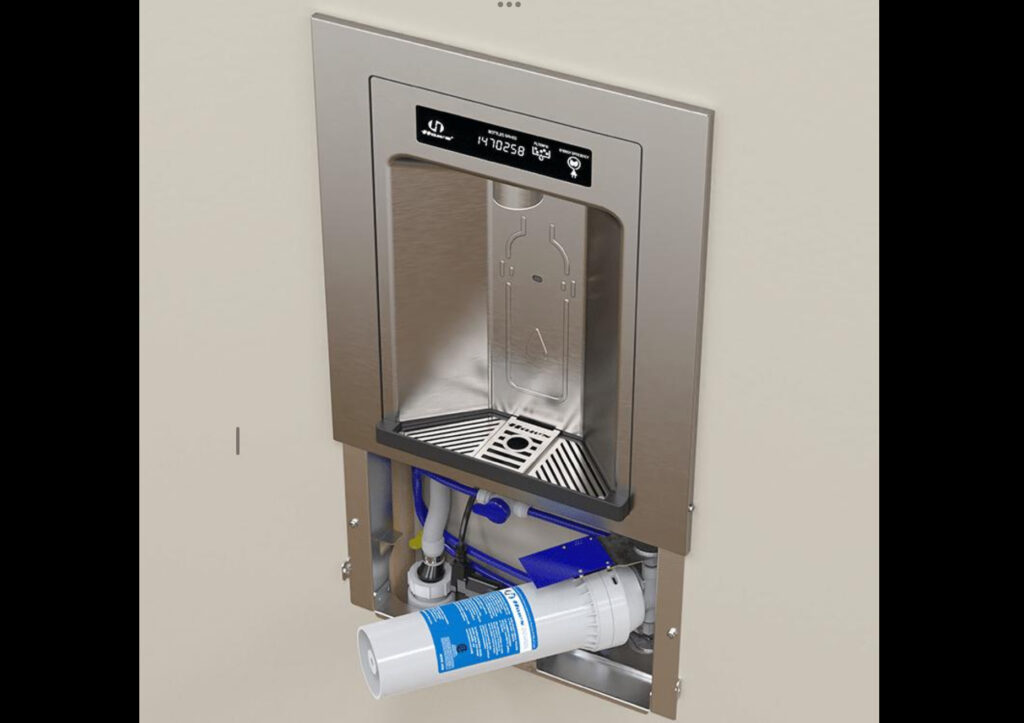
The proposed hydration station is designed to provide subway riders with a convenient and hygienic way to refill reusable water bottles. The system consists of a touchless bottle refill station connected to the subway station’s existing water supply, drainage system, and electrical service. Its purpose is to provide free access to clean drinking water while reducing reliance on single-use plastic bottles. Instead of pressing buttons or handles, riders simply place a reusable bottle beneath the dispenser, where an infrared sensor automatically activates the flow of filtered water. Once the bottle is removed, the water shuts off automatically, helping conserve water while reducing contact with shared surfaces.
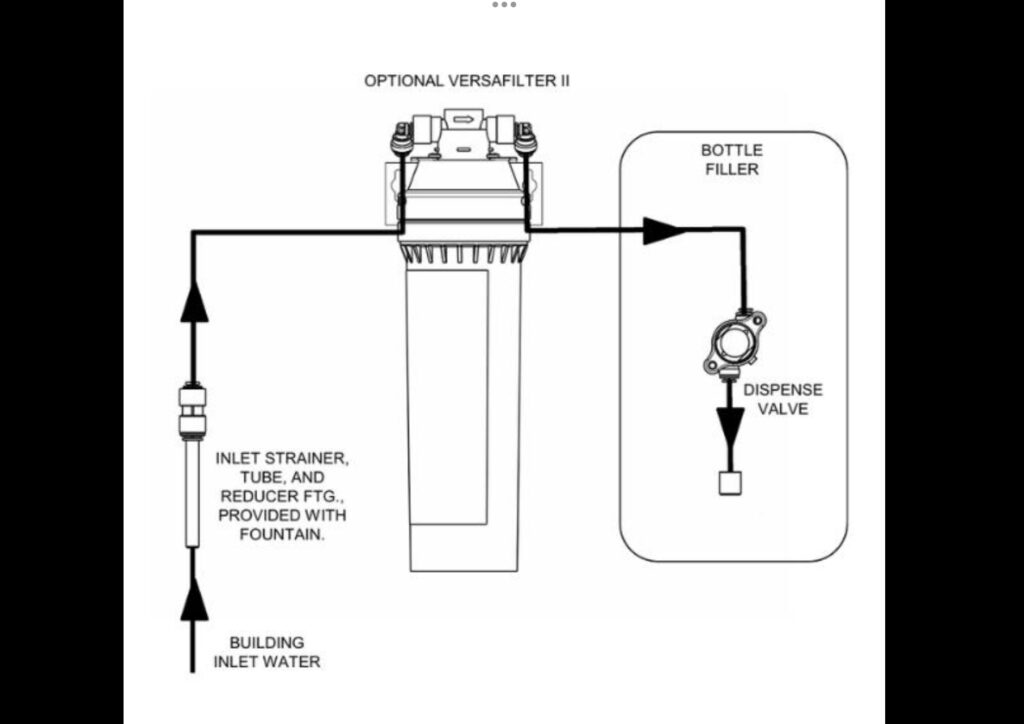
Before reaching the dispenser, municipal water passes through a certified filtration cartridge that removes common contaminants while improving the taste and odor of the water. Using the city’s existing drinking water supply allows the system to provide clean, filtered water without requiring a separate treatment process. The filtration cartridge is located inside the station housing so it can be accessed by maintenance staff when routine replacement is needed.
After passing through the filter, the water travels to the dispensing nozzle. A built-in infrared sensor detects when a reusable bottle is placed beneath the nozzle and automatically opens an electronic valve. Water flows only while the bottle remains in position. Once the bottle is removed, the sensor immediately closes the valve, preventing unnecessary water use. Because the system is touchless, it improves sanitation and reduces wear compared to traditional push-buttom
The refill station installation will be in a busy public transportation environment where durability and reliability are important. The exterior housing is constructed from stainless steel to resist corrosion, daily wear, and vandalism. The unit is securely mounted to the station and connected to existing plumbing, drainage, and electrical systems. The design also follows ADA accessibility guidelines so that riders with different mobility needs can comfortably use the station.
The refill station is designed to be simple and intuitive for riders. A commuter approaches the unit and places a reusable bottle beneath the dispenser. The infrared sensor automatically activates the flow of filtered water without requiring physical contact. Once the bottle has been filled, the rider removes it, and the water flow stops immediately. This process provides quick access to drinking water while maintaining a hygienic and user-friendly experience.
To help keep the system operating efficiently, each refill station includes a monitoring system that tracks refill counts and reports when maintenance is needed. Maintenance staff can use this information to replace filters, inspect plumbing connections, clean the dispensing area, and ensure the sensor continues to operate correctly. The monitoring system only collects information about the equipment itself and does not record or store any personal information from users. Regular maintenance helps ensure the station continues to provide safe drinking water throughout the pilot project.
Estimated cost, materials
| Category | Estimated Cost |
| Hydration units (3 × ~$4,500 each) | $13,500 |
| Plumbing materials and consumables | $12,000 |
| Electrical materials and conduit | $9,000 |
| Skilled labor (plumbers, electricians, MTA flaggers) | $95,000 |
| Software / dashboard development and integration | $45,000 |
| Permitting, inspection, and regulatory review | $18,000 |
| Maintenance staff training | $10,000 |
| Public signage and multilingual outreach | $8,000 |
| Year 1 operations (filter replacement, cleaning, monitoring) | $60,000 |
| Contingency (about 13%) | $39,500 |
| TOTAL PILOT COST | About $310,000 |
The pilot is estimated to cost around $310,000 over twelve months. This figure includes hardware, installation, software integration, training, and the first year of operations and maintenance. The numbers are based on listed prices for commercial bottle-refill stations, prevailing union labor rates in New York City, and similar budgets used for other small-scale MTA improvements.
The Department of Environmental Protection estimated that installing 500 fountains across all five boroughs under the Hydration for All Act would cost about $20 million (Mocker, 2024). At about $103,000 per installed unit, the pilot proposed here is in line with that estimate after accounting for the higher cost of installing inside an underground transit space rather than a park. After the first year, ongoing maintenance is expected to cost about $30,000 per year for all three units combined, which is small compared to the MTA’s annual station maintenance budget.
The expected results of this pilot are simple and easy to measure. Each unit is expected to deliver between 200 and 500 refills per day, for a combined total of about 550,000 refills per year across all three units. If each refill replaces a single 16-ounce plastic bottle, the pilot will prevent more than half a million single-use bottles from entering the New York City waste stream every year. This is only a small part of the city’s total bottled water consumption. Still, it is a visible reduction in a space where the city has direct control over its infrastructure.
The importance of the pilot goes beyond the units themselves. The pilot is intended to demonstrate that public hydration infrastructure in underground transit environments is technically feasible, easy to maintain, and affordable. City officials have suggested that large-scale public hydration may not be feasible at the scale under consideration (Mocker, 2024). A successful twelve-month pilot in a setting as demanding as a subway station could help answer that question by providing real data, which could then be used to support the broader Hydration for All Act or similar programs in other US transit systems.
The social impact of the pilot would mainly benefit the groups most affected by the current gap. Low-income riders would no longer have to pay for clean water during their commute. Elderly riders, pregnant riders, and riders with chronic medical conditions would have free, clean drinking water during long platform waits. Unhoused New Yorkers who use the subway as shelter would also gain access to safe water without needing to buy it. MTA employees working in the same hot conditions as riders would benefit too. The pilot does not take anything away from any group, as its impact is entirely positive.
Three ethical considerations shaped the design. First, the monitoring system collects only operational data, such as daily refill counts, filter status, and leak alerts. It does not record any information about individual users, including no cameras, no biometric data, and no personal identifiers. Second, the three locations inside the station were chosen to be reachable for all kinds of riders, including those entering from the street, transferring between subway lines, or connecting to and from the Port Authority Bus Terminal. Third, the units are free to use without registration, so unhoused individuals, undocumented residents, and other vulnerable riders can use them without barriers or surveillance.
Three factors support the system’s reliability. First, the MTA already operates bottle refill stations at Grand Central and Penn Station LIRR without major issues. Second, similar systems in Tokyo, Paris, and London transit networks have been running for years with documented success. Third, every component used in the proposed unit, from the stainless-steel housing to the cellular monitoring module, is already commercially available from US vendors. The pilot does not require inventing anything new; it only involves putting proven parts together in a new place.
New York City has built one of the most complex underground transit systems in the world, but it has not yet matched its peer cities in providing basic drinking water inside that system. The result is an avoidable public health risk during heat waves, an unnecessary contribution to plastic waste, and a daily financial burden on the riders who can least afford it. The technology that could fix this already exists and is already running in transit systems in other countries. What is still missing is a focused, low-cost pilot to show that it can work in the New York subway environment. This proposal offers exactly that pilot: three filtered bottle refill stations at Times Square–42nd Street, deployed over 12 months at a total cost of about $310,000, with measurable outcomes in access to hydration, plastic waste reduction, and rider satisfaction. The pilot is meant to be small enough to be approved quickly, large enough to produce useful data, and credible enough to support the broader Hydration for All Act if it succeeds.
References
Izydorczyk, G., Mironiuk, M., Baśladyńska, S., Kocek, D., Witek-Krowiak, A., & Chojnacka, K. (2022). Quality of tap water in an urban agglomeration: 2-year monitoring study in Wrocław, Poland. Urban Water Journal, 19(3), 285–298. https://doi.org/10.1080/1573062X.2021.1998833
Mocker, D. (2024, October 28). NYC Council wants 500 more water fountains around the boroughs but DEP turns wrench of doubt. amNY. https://www.amny.com/news/nyc-council-water-fountains-dep-doubt/
New York City Council. (2024). Int 0900-2024: Requiring the installation of outdoor drinking fountains in parks and in other public places. NYC Legislation. https://intro.nyc/0900-2024
Regitsky, A., & da Rosa, J. (2024). Extreme heat adaptation in urban areas: A comparative case study of New York City and New Orleans. Local Environment, 29(10), 1363–1383. https://doi.org/10.1080/13549839.2024.2368580

